What to Do If You Find a Kitten: A Guide to Helping the Tiniest Lives
Spring and summer might bring to mind visions of beach days and vacations, but in animal welfare, the warmer months of the year are known as “kitten season.” This is when shelters across the nation, but especially in the south, see a spike in the number of stray and orphaned kittens.
If you come across a kitten—or a litter of kittens—it’s natural to want to help. But before you scoop them up and rush to the nearest shelter, there are a few important things to consider. Here’s what to do if you find a kitten:
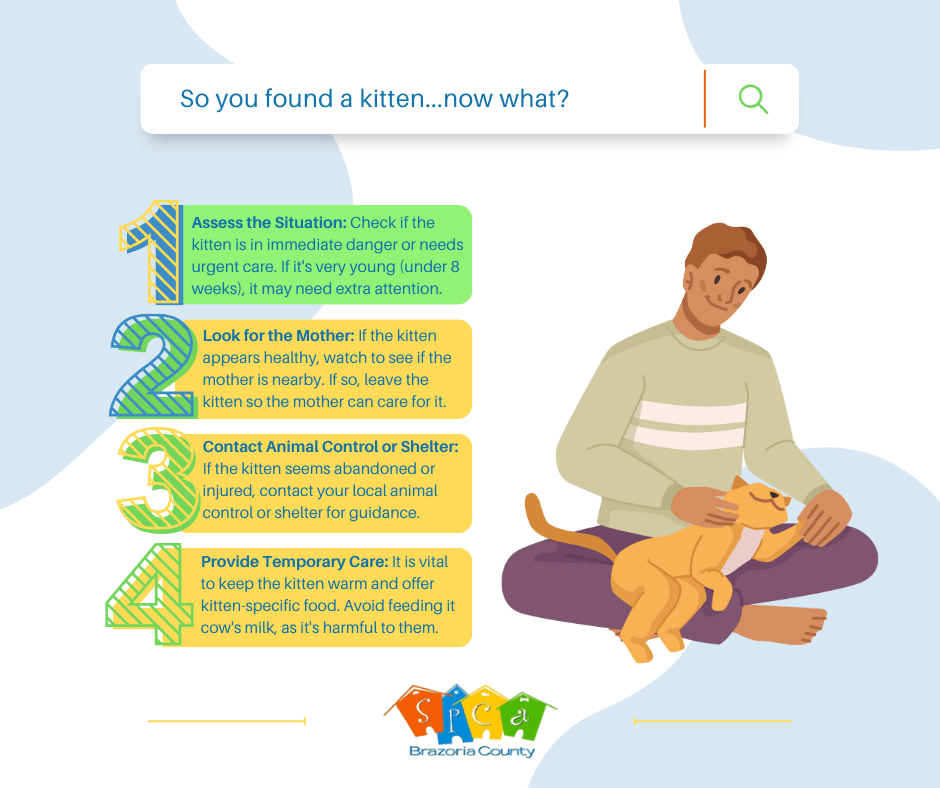
1. Observe First—Don’t Kitten-Nap!
It’s instinctive to want to help immediately, but the best first step is to stop and observe from a distance. Mother cats often leave their kittens for several hours to hunt for food. If the kittens look clean, warm, and are not crying, their mother is likely nearby.
Watch quietly for a few hours from a safe distance. You can also surround the kittens with a circle of flour (yes, from your pantry!). If it is undisturbed after a few hours, intervention may become necessary.
If the mother returns, though, the best thing you can do is let her care for her babies.
2. Assess the Situation
If, after several hours, the mother cat has not returned or if the kittens appear cold, dirty, malnourished, or in danger (e.g., near a road, in a flooded area), it’s time to step in. Carefully move them to a safe, warm location.
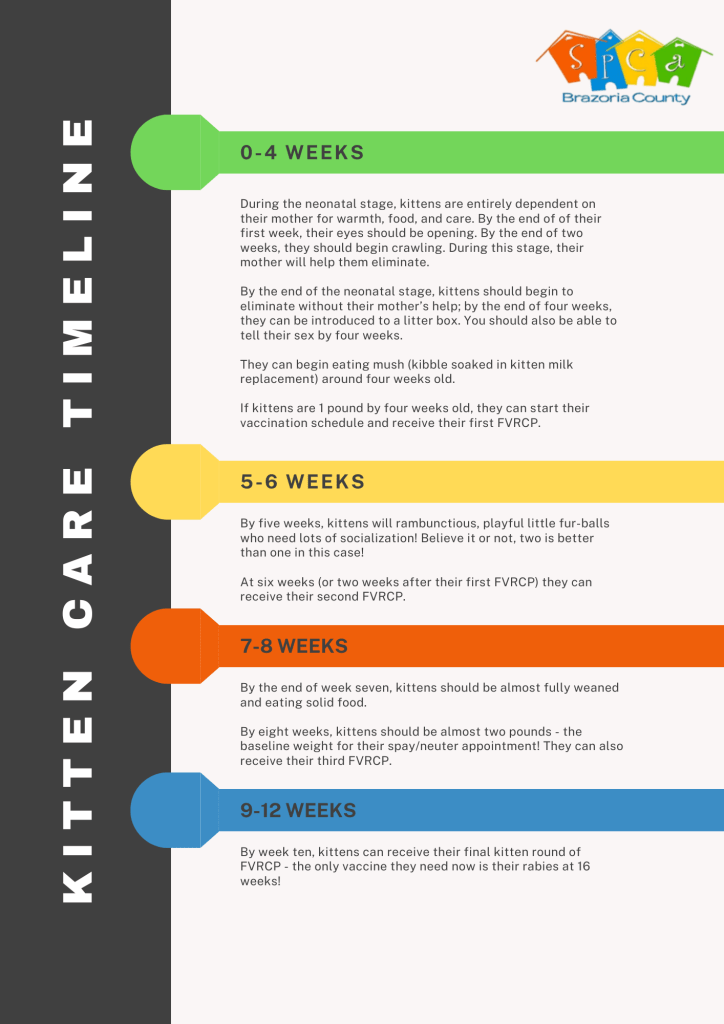
Use this age guide to determine the best course of action:
3. Contact a Local Animal Shelter or Rescue
Once the kittens are safe, reach out to your local shelter, rescue group, or veterinary clinic. Many have resources to help with bottle-feeding, fostering, or taking them into their care. If you’re interested in fostering them yourself, even better—many organizations can support you with supplies and advice, as well as adoption help once the kittens are an adoptable age.
4. Provide Temporary Care
Young kittens cannot regulate their body temperature. Place them in a box or carrier with soft blankets and a heating pad on low, wrapped in a towel.
Never feed a cold kitten—warm them up first—and never feed a kitten cows milk. Cow’s milk can make kittens extremely sick. If they’re very young and need formula, use kitten milk replacer (KMR), which you can find at pet stores.
5. Consider Trap-Neuter-Return (TNR) for Mom
If the mother cat returns and seems feral (unsocialized to humans), you can still help her. Contact your local shelter about a TNR program. Spaying her ensures she doesn’t continue to have litters, and she can be returned to her familiar environment once recovered.
Every Kitten Counts
Kittens are fragile, and the right first steps can make all the difference. By observing first, keeping them warm and safe, and connecting with local animal welfare organizations, you’re giving these tiny lives the best possible chance.
If you have questions or need help, don’t hesitate to contact us at posh@spcabc.org. We’re here to help you help them.



 SPCA of Brazoria County
Leave a comment